
Nerve Repositioning for Dental Implant Placement: A Comprehensive Clinical Guide
Dental implant placement in the posterior mandible is often limited by the close anatomical relationship between the alveolar ridge and the inferior alveolar nerve (IAN). When residual vertical bone height is insufficient, conventional implant surgery carries a significant risk of neurosensory injury.
Nerve repositioning for dental implant placement is an advanced surgical technique that enables implant insertion in severely atrophic posterior mandibles by temporarily mobilizing the inferior alveolar nerve and relocating it away from the implant site.
This article explains the clinical rationale, indications, surgical principles, advantages, limitations, and postoperative considerations of this technique.
What Is Nerve Repositioning in Dental Implant Surgery?
Nerve repositioning refers to the controlled exposure and mobilization of the inferior alveolar nerve (and, when required, the mental nerve) to allow dental implants to be placed in areas where vertical bone height is insufficient.
Two main surgical concepts are used:
- Inferior alveolar nerve lateralization
- Inferior alveolar nerve transposition
Both techniques aim to create a safe implant trajectory without permanently damaging the neurovascular bundle.
Why Is Nerve Repositioning Needed?
In the posterior mandible, progressive alveolar bone resorption after tooth loss may leave only a few millimeters of bone above the mandibular canal.
When residual bone height is severely limited, conventional implant placement may result in:
- Inferior alveolar nerve compression
- Direct nerve trauma
- Persistent paresthesia or dysesthesia
Nerve repositioning allows:
- Placement of standard-length implants
- Improved primary stability
- Restoration of proper crown-to-implant ratio
Indications for Nerve Repositioning
Nerve repositioning should be considered only in carefully selected cases.
The most common indications include:
- Residual vertical bone height above the mandibular canal less than 6 mm
- Inability to achieve adequate primary implant stability
- Patients who are not suitable candidates for vertical bone augmentation
- Patients seeking shorter treatment time compared to staged grafting procedures
Contraindications
This technique is not suitable for every patient.
Common contraindications include:
- Severe systemic conditions affecting bone healing
- Patients with pre-existing neurosensory disturbances in the distribution of the inferior alveolar nerve
- High surgical risk patients
- Lack of sufficient buccolingual bone width
Lateralization vs Transposition of the Inferior Alveolar Nerve
Inferior Alveolar Nerve Lateralization
In lateralization, the nerve is gently mobilized and displaced laterally during implant placement.
The mental foramen remains intact.
This method is preferred when:
- The surgical field is posterior to the mental foramen
- The mental nerve does not require repositioning
Inferior Alveolar Nerve Transposition
In transposition, both the inferior alveolar nerve and the mental nerve are mobilized.
The mental foramen is bypassed and the nerve is repositioned posteriorly.
This technique is used when:
- When the surgeon should place an implant in the premolar-molar region
- The mental nerve directly interferes with implant positioning
Surgical Principles
Nerve repositioning is a microsurgical procedure that requires precise planning and atraumatic technique.
Key steps include:
- Preoperative CBCT-based three-dimensional assessment of the mandibular canal
- Precise osteotomy of the lateral cortical window
- Gentle identification and mobilization of the neurovascular bundle
- Immediate implant placement under direct visual control
- Repositioning of the nerve onto the implant surface or adjacent bone
Piezosurgery is frequently preferred for the lateral window osteotomy because of its selective cutting properties and reduced risk of nerve injury.
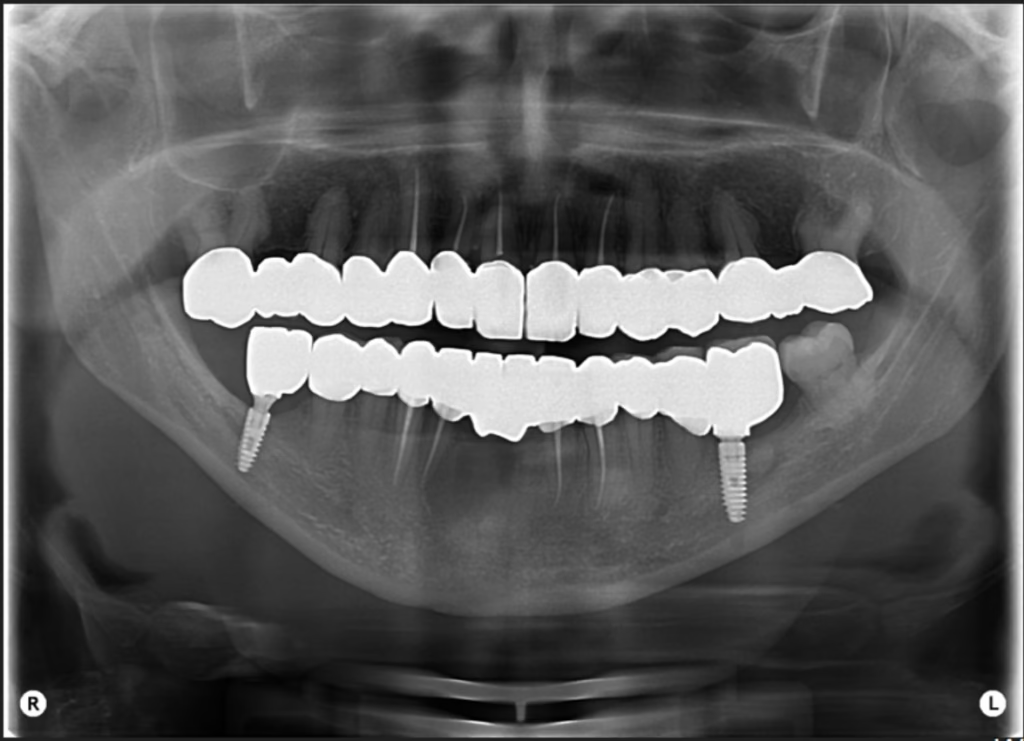
Role of Digital Planning and CBCT
Accurate preoperative imaging is mandatory.
CBCT analysis provides:
- Exact canal trajectory
- Identification of anatomical variations
- Buccolingual bone width assessment
- Precise implant length planning
Digital planning significantly reduces intraoperative complications and improves predictability.
Advantages of Nerve Repositioning
- Allows placement of longer implants
- Eliminates the need for vertical bone augmentation in selected cases
- Reduces total treatment time
- Enables immediate or early loading protocols in suitable patients
Limitations and Risks
Despite its advantages, nerve repositioning remains one of the most technique-sensitive procedures in implant surgery.
The most relevant risks include:
- Temporary or permanent paresthesia
- Dysesthesia or altered sensation
- Neuropathic pain
- Postoperative edema and hematoma
- Increased surgical complexity
Respecting atraumatic surgical principles allows most transient sensory disturbances in the early postoperative period to resolve over time.
Postoperative Care and Recovery
Patients should be informed in advance about the possibility of temporary neurosensory changes.
Typical postoperative management includes:
- Anti-inflammatory medication
- Neurotrophic support if required
- Strict follow-up of sensory function
- Soft diet during the early healing phase
Regular neurosensory testing should be performed to monitor recovery.
Is Nerve Repositioning Better Than Short Implants?
Short and ultra-short implants represent an alternative in some cases.
However, in severely resorbed posterior mandibles, short implants may:
- Compromise prosthetic design
- Increase crown-to-implant ratio
- Reduce long-term biomechanical stability
Nerve repositioning remains a valuable option when optimal implant length and position are essential for long-term success.
Nerve Repositioning for Dental Implant Placement in Turkey
Turkey has become a leading destination for advanced implant surgery due to the availability of experienced oral and maxillofacial surgeons, modern digital planning systems and cost-effective treatment options.
Our pecialized center with expertise in advanced mandibular surgery and microsurgical nerve handling should perform nerve repositioning only.
Frequently Asked Questions (FAQ)
Is nerve repositioning for dental implant placement safe?
When performed by experienced surgeons using CBCT-based planning and atraumatic techniques, nerve repositioning is considered a predictable procedure. However, it carries a higher risk profile compared to conventional implant placement.
How long does numbness last after nerve repositioning?
Temporary numbness or altered sensation may occur. In most patients, sensory recovery is observed within weeks to several months.
Can implants be placed at the same time as nerve repositioning?
Yes. Immediate implant placement is an integral part of the procedure and is usually performed during the same surgical session.
Is nerve damage permanent?
Permanent neurosensory deficits are uncommon but possible. Thorough patient selection and surgical expertise significantly reduce this risk.
Is nerve repositioning painful?
The procedure is performed under adequate anesthesia. Postoperative discomfort is usually comparable to advanced implant surgery and can be managed with standard medications.
Who is a suitable candidate for nerve repositioning?
Patients with insufficient vertical bone height above the mandibular canal and good overall health may be candidates after comprehensive clinical and radiological evaluation.